Socializing your Doodle
- Over The Moon Mini Ranch

- Dec 23, 2024
- 4 min read
Updated: Jan 9, 2025
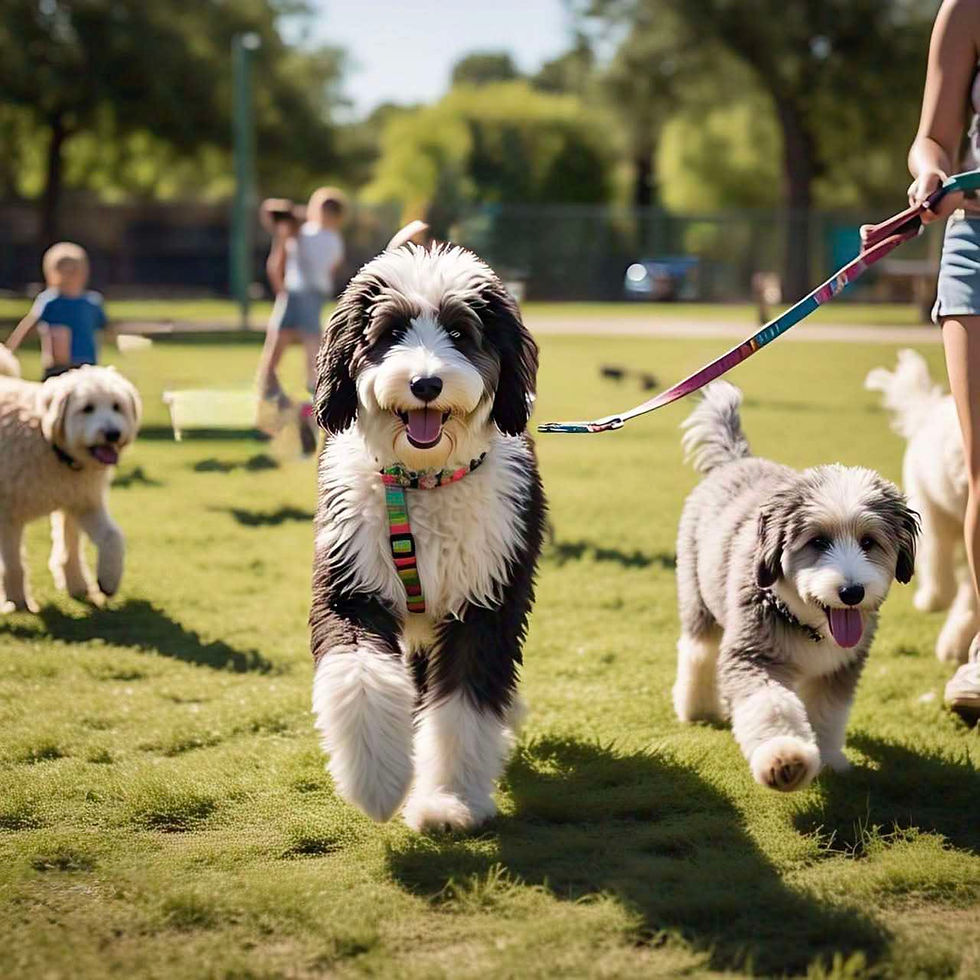
Comprehensive Lesson Plan: Socialization for a Doodle
Objective:
Socialize your doodle to ensure they are confident, well-mannered, and adaptable in various environments. Proper socialization reduces fear, aggression, and anxiety, helping your doodle become a friendly and balanced companion.
Why Socialization is Important for a Doodle
Doodles are Social Dogs: As a mix of breeds like Poodles and Retrievers, doodles are often energetic and curious but can be sensitive to new experiences.
Prevention of Behavior Problems: Early socialization reduces fear-based behaviors, such as barking, growling, or avoiding new situations.
Enhances Confidence and Adaptability: Socialized dogs handle changes, noises, people, and other animals with ease.
Goals of Socialization:
Introduce your doodle to a variety of sights, sounds, people, and environments.
Teach your doodle to remain calm and confident during new experiences.
Build positive associations with diverse stimuli.
Materials Needed:
High-value treats (small, soft, and easy to carry).
Leash and harness.
Toys for distraction or comfort.
Access to controlled environments like parks, pet-friendly stores, and training centers.
1. Puppies (8-16 Weeks): The Critical Socialization Window
Step 1: Introduce New People
Invite friends and family of varying ages, genders, and appearances to interact calmly with your puppy.
Allow your puppy to approach at their own pace.
Reward with treats and praise for calm behavior.
Step 2: Expose to Different Sounds
Gradually introduce common household sounds like vacuum cleaners, blenders, and doorbells.
Play recordings of city noises, thunderstorms, or fireworks at low volumes, increasing gradually.
Reward calm responses.
Step 3: Explore New Environments
Carry your puppy to safe locations if they are not fully vaccinated.
Visit parks, pet-friendly stores, or sidewalks to expose them to different textures (grass, gravel, pavement) and sights (cars, strollers, bicycles).
Step 4: Meet Other Dogs
Arrange playdates with healthy, vaccinated puppies or calm adult dogs.
Monitor interactions closely, ensuring they are positive and safe.
2. Adolescents (4-12 Months): Building Confidence
Step 1: Continue Exposure
Introduce more diverse environments, such as outdoor cafes, busier parks, and pet-friendly businesses.
Practice calmness in these locations using treats and focus exercises.
Step 2: Manage Fear Periods
Adolescence may include fear phases. Avoid forcing interactions but continue exposing your doodle to new experiences at their comfort level.
Step 3: Group Classes
Enroll in positive reinforcement-based group training classes to practice social skills with other dogs and people.
3. Adults (1 Year and Older): Maintaining Socialization
Step 1: Reinforce Previous Experiences
Regularly revisit previously socialized scenarios to maintain confidence.
Continue rewarding calm and positive behavior.
Step 2: Introduce New Challenges
Expose your doodle to new experiences, such as hiking trails, pet-friendly events, or swimming.
Ensure experiences remain positive by progressing at your dog’s pace.
Step 3: Address Problem Areas
If your doodle has specific fears or anxieties, work with a trainer to gradually desensitize and counter-condition them to the trigger.
Socialization Activities
Meeting Different People:
Expose your doodle to individuals with hats, sunglasses, umbrellas, or in wheelchairs.
Encourage gentle interactions with children and older adults under supervision.
Encounters with Other Dogs and Animals:
Visit dog-friendly parks, ensuring interactions are friendly and controlled.
Expose your doodle to animals like cats, squirrels, or birds in a safe manner.
Exploring Environments:
Walk in urban areas, parks, and nature trails.
Introduce stairs, elevators, and different ground textures.
Handling and Grooming Practice:
Get your doodle accustomed to being touched on their paws, ears, and tail.
Practice brushing, bathing, and nail trimming at home to reduce grooming anxiety.
Dos and Don’ts of Socialization
Dos:
Use treats and praise to create positive associations.
Progress at your doodle’s pace—never rush or force interactions.
Reward calm behavior and redirect undesirable responses like barking or lunging.
Expose your doodle to a variety of stimuli regularly.
Don’ts:
Avoid overwhelming your doodle with too many new experiences at once.
Never punish fearful or shy behavior. Use patience and positive reinforcement instead.
Avoid chaotic environments (e.g., crowded dog parks) during early socialization.
Common Challenges and Solutions
Challenge 1: Fear of New Experiences
Solution: Start with low-intensity exposure and reward calm behavior. Gradually increase intensity as your doodle becomes more confident.
Challenge 2: Overexcitement Around Other Dogs or People
Solution: Practice focus exercises like “Look at Me” or “Sit” before interactions. Reward calmness and use distance to manage excitement.
Challenge 3: Reactivity to Stimuli
Solution: Work on desensitization and counter-conditioning with a trainer if needed. Reward calm behavior and avoid reinforcing reactive responses.
Evaluation Criteria
Your doodle is well-socialized when they:
Remain calm and confident in new environments.
Interact politely with people, dogs, and other animals.
Adapt easily to new sights, sounds, and experiences.
Respond to cues (like “Sit” or “Look at Me”) even in distracting situations.
Tips for Success
Start early: The earlier you begin, the easier it is to shape positive behaviors.
Be consistent: Regular exposure is key to maintaining socialization.
Celebrate small wins: Reward even the smallest steps toward confidence.
Seek help if needed: Work with a professional trainer for specific challenges.
By following this plan, your doodle will grow into a confident, well-mannered, and adaptable companion capable of thriving in any situation.


Comments